

When Account Takeover Prevention Goes from ‘Strategy’ to ‘Gamble’
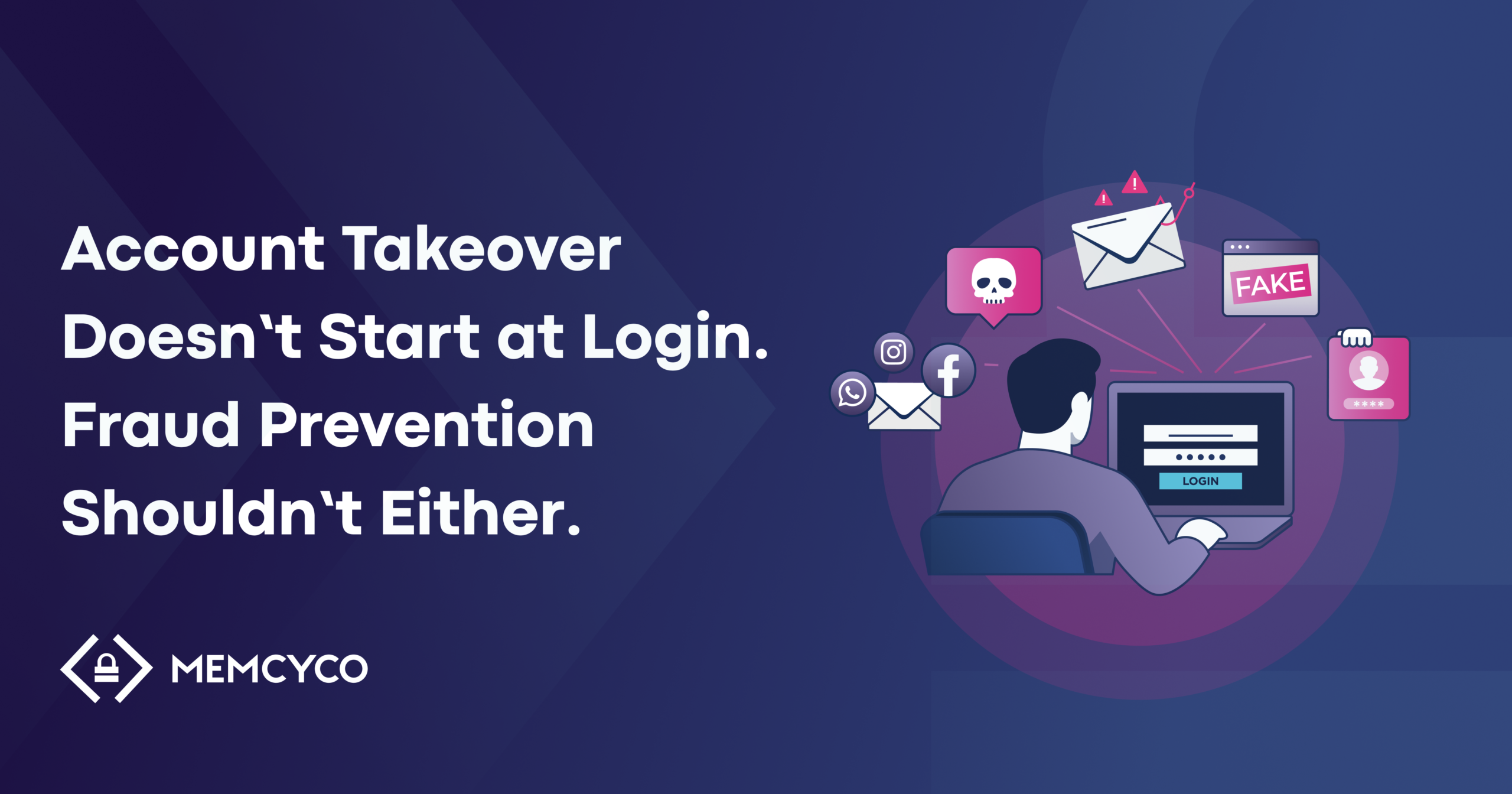
Account takeover doesn’t begin at login. Fraud prevention cannot afford to begin there either.
By Craig Currim| SVP, Global Solutions Engineering & Strategy at Memcyco
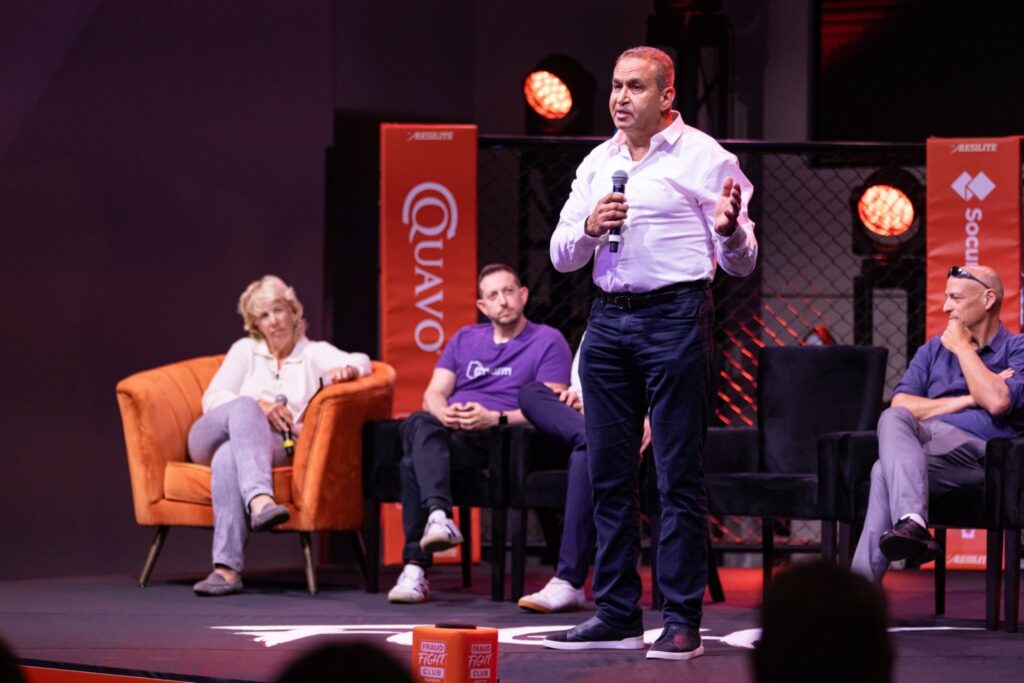
At Fraud Fight Club Round III, one question kept surfacing. Are we making fraud decisions too late in the attack lifecycle?
Across discussions with fraud, security, and risk leaders, a consistent pattern emerged: many controls are still anchored to the point where fraud becomes visible, not where it begins.
Financial institutions have spent years strengthening authentication, fraud monitoring, transaction controls, threat intelligence, and takedown workflows. These investments matter. They have made attacks harder, improved detection, and helped institutions respond faster when fraud surfaces. But scam-driven account takeover continues to expose a difficult truth: many controls still engage too late in the attack lifecycle.
Account takeover (ATO) is often treated as a login-stage problem because login is where risk becomes observable inside the institution. A suspicious device appears. A credential is reused. A session looks unusual. An access attempt triggers a model, a rule, or a manual review.
The problem is that, in many modern attacks, the decisive events have already happened by then. The customer may already have been targeted. The impersonation site may already have been visited. Credentials may already have been harvested. A remote access session may already be underway. A fraudster may already have shaped the conditions under which the bank is now being asked to decide whether to trust the interaction.
That timing gap is where many ATO defenses lose leverage.
The industry does not lack signals. In many cases, it has accumulated too many disconnected ones. Fraud stacks have become a data-science and orchestration problem, with more tools, more alerts, and more risk indicators flowing across teams.
The challenge is no longer simply collecting signals. It is correlating the right signals quickly enough to act before the threat reaches the front door.
The industry does not lack signals. In many cases, it has accumulated too many disconnected ones.
ATO is usually created before It is detected
Account takeover rarely begins with the login attempt itself. Login is often the point where the institution first sees the risk clearly, but it is not usually where the attack begins.
Scam-driven ATO can start with brand impersonation, social targeting, phishing kits, fake sites, credential harvesting, remote access manipulation, credential purchase, account recovery abuse, device registration, or authenticator enrollment abuse.
If ATO is viewed only as an authentication event, financial institutions are forced to make trust decisions based solely on the final stage of the attack.
The login may satisfy the institution’s authentication checks. The credential may be correct. The device may be familiar. The customer may even complete authentication successfully.
But validity is not the same as trust. A bank may be looking at a login event. The attacker may be looking at the final step of a broader deception chain.
This is why treating ATO as a login problem narrows the institution’s field of view. It places too much weight on the point of access and too little on the conditions that made that access risky in the first place.
What Is the Live Exposure Window in ATO Prevention?
The live exposure window is the period when a customer is being targeted, redirected, deceived, harvested, or manipulated before the resulting risk fully appears inside the legitimate banking environment.
This window sits between external threat monitoring and internal fraud decisioning. It is where impersonation, phishing exposure, suspicious infrastructure, device signals, credential compromise, and user manipulation begin to connect.
When the first meaningful decision happens only at login, the institution is deciding at the worst possible time: after the attacker has already influenced the journey. At that point, the question is no longer only whether a session looks unusual. It is whether the institution can reconstruct enough upstream context to understand what brought the user, device, or credential to that moment.
That is not a strategy. It is a gamble.
When the first meaningful decision happens only at login, the institution is deciding at the worst possible time
The live exposure window should not be treated as a brand-protection issue on one side and a fraud issue on the other. For attackers, these stages are connected. For many institutions, they are still operationally separated.
Why Authentication Alone Is Not Enough Context
Stronger authentication remains essential. MFA, passkeys, and improved identity controls all play an important role in reducing unauthorized access.
But authentication is not the same as fraud determination.
In adversary-in-the-middle and relay attacks, customers may complete authentication while the attacker exploits the session flow. In remote access scams, activity may originate from a recognized user device while the customer is under attacker influence. In credential stuffing or brute-force scenarios, the meaning of a login attempt changes significantly when it can be connected to prior exposure.
There are also vulnerable moments around registration and recovery. Device registration, authenticator enrollment, re-registration, and account recovery processes can create windows that attackers attempt to exploit. Even synced passkeys, while valuable for usability and security, depend in part on the security of the cloud account or keychain environment where they are stored.
Authentication is being asked to answer questions it was not designed to answer alone.
The better question for risk leaders is not only, “Did this user authenticate?” It is, “What happened before this authentication event?”
Without that earlier context, a bank can verify access while still missing the conditions that made the session risky.
Existing Risk Workflows Need Earlier Context
Banks already operate fraud engines, identity systems, SOC workflows, case management processes, and customer outreach teams. The issue is not that these workflows are absent. It is that too many of them are forced to make decisions with late or fragmented context.
Relevant upstream signals may include exposure to fake journeys, suspicious domains, high-risk devices, credential harvesting indicators, anomalous login patterns, account recovery anomalies, device enrollment anomalies, and attack-linked infrastructure.
Any one signal may be inconclusive on its own. Correlated quickly, they can change the quality and timing of a risk decision. This is the operational shift that matters.
More tools and signals do not automatically create better decisions. As fraud stacks expand, the hard problem becomes correlation: connecting the right signals fast enough to support action before account takeover occurs.
More tools and signals do not automatically create better decisions.
That action does not need to mean blanket friction. Earlier context can help risk teams prioritize users, apply selective step-up, trigger targeted outreach, enrich investigations, escalate suspicious access attempts, or coordinate response across fraud and cyber teams.
The goal is not to replace existing workflows. It is to make them earlier, better informed, and more connected.
Fraud, Cyber, and Brand Risk Are Still Too Separate
Digital impersonation is often managed as brand protection or threat intelligence. Login risk is often managed by fraud, identity, or authentication teams. Scam investigation may involve fraud operations, SOC analysts, customer support, and compliance.
Attackers do not operate according to those internal lines. They use impersonation, credential harvesting, social engineering, access attempts, recovery abuse, and device enrollment as one connected workflow.
A fake site is not just a brand issue if it produces credential exposure. A suspicious login is not just an authentication issue if it follows a phishing journey. A customer support case is not just a service issue if it reveals live scam exposure.
This is why the timing gap is also an operating-model gap.
Financial institutions need internal processes that connect these signals earlier and reduce handoff delays between teams. Otherwise, each team may see part of the attack while no one sees the attack path quickly enough to intervene.
From More Alerts to Better Timing
The future of fraud prevention will not be defined by generating more alerts. Most institutions already have enough noise.
The better goal is to improve when risk teams can act and how confidently they can act. Earlier context changes operational decision-making in several ways:
- High-risk users can be prioritized before losses occur.
- Selective friction can be applied to sessions with stronger risk context, rather than increasing friction for everyone.
- Investigation teams can work from a connected attack timeline instead of disconnected incidents.
- Customer outreach can become more targeted and timely.
- SOC and fraud teams can coordinate around shared evidence rather than parallel workflows.
This is especially important as scam-driven ATO continues to blur the line between cyber event, fraud event, and customer manipulation.
The future of fraud prevention will not be defined by generating more alerts. Most institutions already have enough noise.

The institution that only sees the login may be left debating whether the session looks suspicious. The institution that sees the upstream exposure may understand why the session is suspicious.
That is a different quality of decision.
What Banks Should Reconsider in 2026
Financial institutions do not need to frame this as a search for yet another standalone control. The more useful exercise is to examine whether existing workflows can answer the questions that now matter earlier in the attack lifecycle.
- Which customers may have been exposed before login?
- Which devices, credentials, recovery attempts, or registration events show links to scam activity?
- Which login attempts are connected to suspicious upstream activity?
- Which signals are being collected but not correlated quickly enough to influence action?
- Which teams need shared visibility across impersonation, authentication, fraud, identity, and investigation workflows?
These questions shift the conversation from tool coverage to decision timing. That is where the next phase of ATO prevention needs to focus.
Fraud Prevention Has to Move Earlier
Authentication remains essential, but it cannot remain the first meaningful moment of risk visibility.
Account takeover prevention has to account for the attack stages that happen before login: targeting, impersonation, exposure, harvesting, manipulation, recovery abuse, and suspicious device activity. These are not side issues. They are often the conditions that determine whether the eventual login can be trusted.
The next phase of fraud prevention will depend on whether financial institutions can connect upstream scam exposure signals to the workflows they already rely on: authentication, fraud scoring, case management, customer outreach, and SOC investigation.
The future will be defined less by adding another alert, and more by acting earlier with the context banks already need. Account takeover does not begin at login.Fraud prevention cannot afford to begin there either.
| Posted in: | AF Education |