

Resale Marketplace Trust: Catching Bad Actors Without Losing Good Members
In 2025, the U.S. secondhand market grew nearly four times faster than the broader retail clothing market. By 2030, it’s projected to reach $78.8 billion. (ThredUp 2026 Resale Report).
That growth creates opportunity for marketplaces. It also creates cover for fraud.
As millions more buyers, sellers, listings, and transactions enter the ecosystem, fraud becomes harder to distinguish. A counterfeit listing can look like any other listing, account takeover can look like a trusted seller, and refund abuse can look like a legitimate dispute.
That’s why trust can’t be established once at signup. As accounts, behavior, and transactions evolve, marketplaces need the right signals to continuously distinguish trusted activity from emerging risk.
That comes down to continuously answering four seemingly simple questions:
- Who are you onboarding?
- Are your members signaling fraud or malicious intent?
- Is the same person still behind the account?
- And when money moves, is it going to the right person?
Here are five ways resale marketplaces can get closer to those answers.
1. Build seller trust before the first listing
Before a seller lists their first item, you need confidence that they are who they say they are. But that shouldn’t mean asking every seller for an ID or selfie. If you do that, it’ll result in a significant drop off.
Start with what you already collect at signup. Check the email, phone, and address signals at signup, and layer in device signals so you can establish trust in the background, before a seller notices a check is happening.
For many sellers that’s enough to start selling. When it isn’t, or when the activity itself calls for greater assurance, route them to document verification.
The goal is to make it easy for trusted sellers to start selling, while adding more assurance when risk calls for it.
2. Look beyond the individual account
A buyer or seller can look trustworthy in isolation, but when you connect their account to everything else happening on your marketplace a different story could emerge.
Take a new seller who signs up with a different name, email, and phone number, but shares a device, address, or payout account with an account you’ve already suspended. On its own, the new account passes every check. Next to its connections, it’s the same seller you removed, but under a new identity.
Connecting identity, device, account, and transaction signals across the marketplace, not just within one account, is what surfaces these patterns: sellers returning after removal, one person behind several accounts, and buyers and sellers working together.
No single signal tells the story. Understand the network behind an account, not just the activity inside it.
3. Recognize when trust changes
Years of successful transactions, positive reviews, completed sales, and consistent activity build trust. This history is also what makes the account worth stealing. Whoever gains control, inherits the reputation along with it. They can list high-value or counterfeit goods under a trusted name or redirect future payouts before the real owner notices.
The key is recognizing when the signals behind an established account start to change. A new device or location may be routine, but combine it with a password reset, new payout information, or a sudden change in listing activity, and there may be a reason to take a closer look. Use those changes to trigger additional verification when needed, rather than repeatedly reverifying every seller.
Protect the trust sellers have built over time by recognizing when someone else may be trying to take advantage of it.
4. Don’t forget the buyer side
Buyers can abuse a marketplace too by using their own identities to game the system. That includes false “item not received” claims, swapping in a different item on a return, disputing charges after keeping the goods, or teaming up with a seller to fake sales and reviews.
These buyers will pass your identity checks because they are who they say they are. But, if you look at their history, you’ll be able to see if they have patterns tied to refund, promo, or chargeback abuse.
Trust is a two-sided decision. Give the buyer the same scrutiny you give the seller.
5. Add more protection when money moves
You need confidence that the money from a sale is going to the right person.
Before sending a payout, confirm the receiving bank account is active and that its ownership matches the seller you have already verified. This becomes especially important when a seller adds a new payout account or changes where their earnings are being sent.
A mismatch doesn’t necessarily mean fraud, but it can provide a reason to pause the payout and ask for additional assurance before funds leave the platform.
Trust in a seller shouldn’t stop at the listing. Extend it all the way through to the account that actually receives the money.
Build trust across the marketplace
Resale marketplaces shouldn’t have to add more friction everywhere to manage fraud.
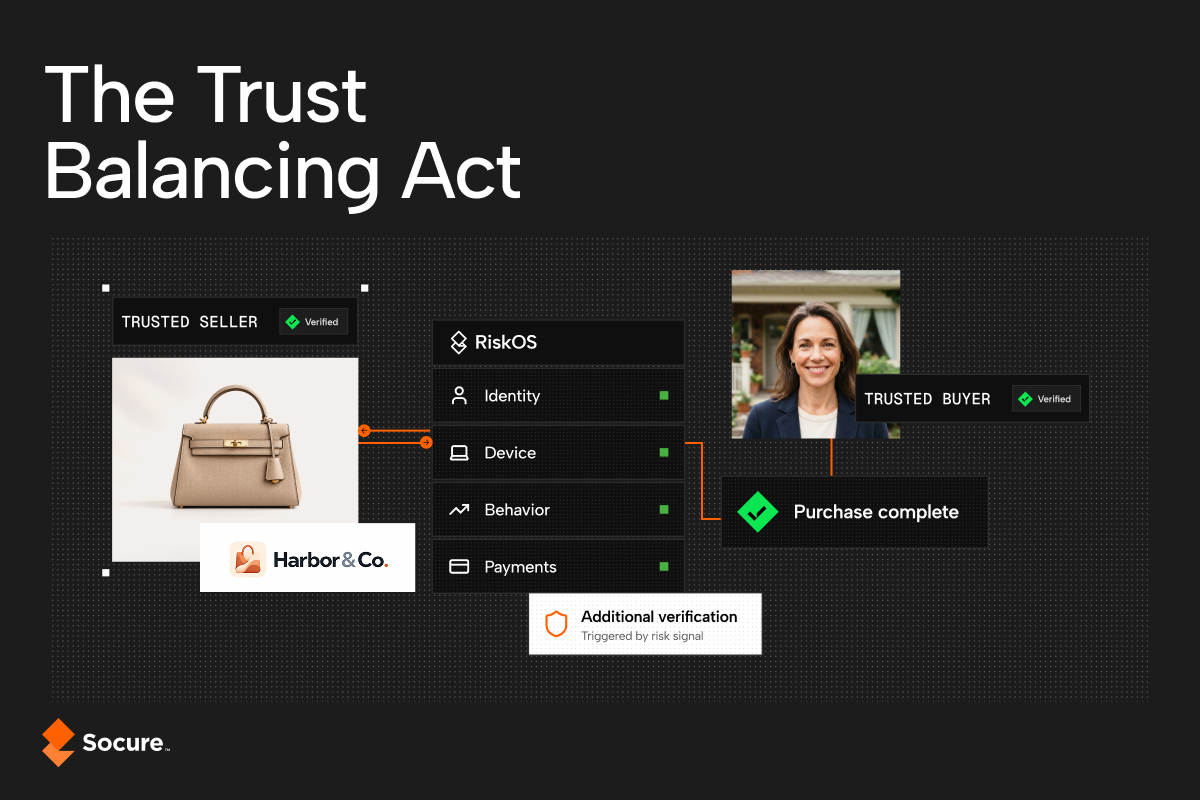
A better approach is to increase assurance when the risk changes. That could mean a new seller listing high-value goods, multiple accounts showing connections to counterfeit activity, or an established account suddenly showing signs that control has changed.
Trust isn’t just a seller decision or a buyer decision. It’s a marketplace decision, and it depends on seeing both sides of a transaction together, not in isolation.
See how RiskOS brings it all together. One platform, one decision layer, across every signal in this piece.
Talk to our team about building this into your marketplace.
| Posted in: | AF Education |